We have seen several images that only need a stroke or two, to move from realism to abstraction.


Can you move this image both ways?
Give it a try.
We have seen several images that only need a stroke or two, to move from realism to abstraction.
Can you move this image both ways?
Give it a try.


You can have all kinds of fun cutting up an image and then shuffling the pieces before putting them back together in a different order. You might expect to see some crazy, meaningless collages, but give it a chance. The subject needn't be a landscape. For example:


Use one of these or find your own image, cut it into thirds, reassemble it, and then paint it.
.
Sorry to leave you so little time for homework. I'l get right to it.
Much of the painting work we do skips careful realism and jumps ahead to exaggeration and invention. We can recognize a moment where we may assume that the viewer know whats we are saying even though we've left out most of the available information.
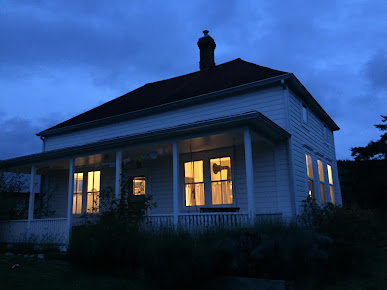
Here's an image that would benefit from simplification and taking a few chances.


The tradition for the final homework of the term is for everyone to send a piece or two of finished or unfinished work. If you like, here are a few provocative images that you are welcome to use for copying or interpretation.

From many, one. Start with one big. pale shape and add color: light, middle, dark.
This Monogram value study is already done.

This one would welcome a limited pallet treatment, one warm, the other cool


Please read this more than once.
Making a single color study is a valuable tool for any medium. It is a powerful first step toward abstraction. it can reveal the compositional relationships between shapes. It can measure the role of color temperature in creating an illusion of space.
Like most studies, monochrome value studies begin by locating the major shapes. Drawing helps, but don't get carried away. At this point we need to know where the shapes are, not what they are. Struggling to identify the components prematurely leads to overpainting and to a degree of complexity that is often not necessary.
Choose a color that can get dark enough to represent black. Dilute with water to lighten your color, and enrich with pigment to darken it. How many steps your value study takes is usually determined by the complexity of the source image.
The relative simplicity of this image suggests a three step study;


During our critiques and especially after, when I make the rounds and discuss your work one on one with you, I often hear the comment that you are "just playing". I know the idea is that you are experimenting, taking chances, but there is also a bit of the suggestion that this is not your real work and should not be judged.
I hope I can always encourage you to take chances and be inventive, even if it means in part that you risk being taken seriously. Who is the main judge, anyway?
I also hear "If I did that again, I'd do that part differently". Do you hear the opportunity in there? Imagine if you really did do it over again every time you said you would!
For homework, please find a painting among those from the last couple of weeks and identify a passage that would benefit from some analysis and paint it again.
Feel free to be playful!
