Friday, October 28, 2022

Using Edges to Create an Illusion of Space

Using edge quality to create an illusion is familiar territory to most realist artists. It is especially important for watercolor painters, for whom the meaning of the shapes and strokes are realized by the behavior of the water. Look at this detail from a watercolor landscape. 


You can see that the paper was wet when the pattern of the background was applied, and suddenly dried when it reached the foreground. The abrupt change of edge texture reveals which shape was meant to seem to be in front. The illusion is also supported by color temperature changes along a transition line between background and foreground, but it is definitely what happens where hard edge meets soft that accounts for most of the impression of space. 


Choose a picture from your own collection or use one of these and experiment with hard and soft edges. Can you see the location of the major shapes change when you alter the edges?


Friday, October 21, 2022

The Paint Itself

In addition to the usual elements of a realistic painting in progress, such as color distribution or the illusion of light, a watercolor painter  often needs to pay attention to and make decisions about the look of the medium itself.  Is the paint worth looking at as a collection of brushstrokes apart from what it is a picture of?

Look at this watercolor by Georgia O'Keefe. The paint has been set free to flow and the transparent strokes are encouraged to allow light to pass through the subsequent layers. See how setting the strokes free  demonstrates that the subject matter can be made from nothing but the beautiful paint


Not every watercolor is first and foremost about the paint..
Here are two from John Marin : one that Scratches it's way across the page 
and another that swims gracefully.


How about making two versions of an image from one of these painters or another of your choice

and consider, for example,
how would Arthur Dove have painted the scene or object?
How about Marsden Hartley?
Charles Burchfeld?
Helen Frankenthaler?


Thursday, October 13, 2022

Green Light


Here's a motif we saw several times in last week's critique. The first  layer was  mostly soft-edged and pale, more shapes than lines.

 The collection of marks still has no content when the second layer is applied. It is heading toward recognizable content, but without any third layer darks we have to guess what we're looking at.


This collection of shapes becomes meaningful right away. Just about everything happens by the time the second layer is composed. 


And here's a combination of shapes and lines built along a traditional track that stops at light, middle, dark and ultra dark, picking up context along the way. 
Feel free to work with recognizable form and/or abstraction. 
Be prepared to describe how your painting unfolds


Thursday, October 6, 2022

Try Not to Try


Painting by Susan Dory


Can you make a thoroughly abstract painting like Joan Mitchell, Helen Frankenthaler or maybe Frank Stella or Donald Judd? Try to make a painting that doesn’t remind you of something else.


Take some time to look up these painters and when you are ready, start painting.


Thursday, September 29, 2022

Cross the Line: Realism>Abstraction

 We have seen several images that only need a stroke or two, to move from realism to abstraction.


Look at this image from China Beach. What would it take to nudge this image from the realist to the abstract?


Can you move this image both ways?

Give it a try.

Friday, September 23, 2022

Who's in Charge Here?


 How much information does it take before we can tell what the content is? Here's an altered landscape  that has been cut and pasted. Nothing is missing, but scene has been changed significantly. 


You can have all kinds of fun cutting up an image and then shuffling the pieces before putting them back together in a different order.  You might expect to see some crazy, meaningless collages, but give it a chance.  The subject needn't be a landscape. For example:


Use one of these or find your own image, cut it into thirds, reassemble it, and then paint it. 


                                                                .


Monday, September 19, 2022

What a lovely wedding!

 Sorry to leave you so little time for homework. I'l  get right to it.

Much of the painting work we do skips careful realism and jumps ahead to exaggeration and invention. We can recognize a moment where we may assume that the viewer  know whats we are saying even though we've left out most of the available information. 

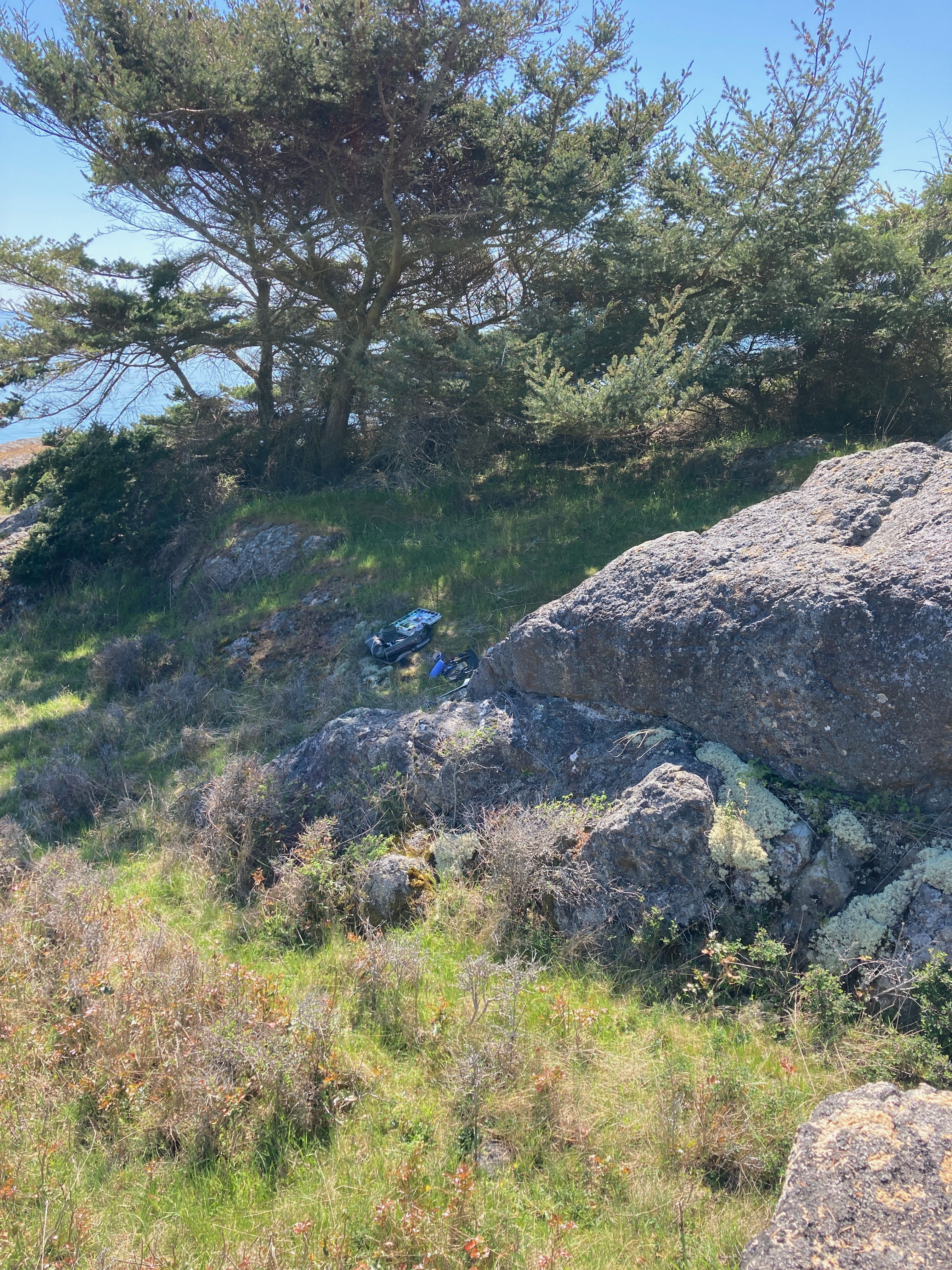
Here's an image that would benefit from simplification and taking a few chances.


Here's another. How would you make fewer shapes? Do you need to  make clear what all that -made stuff is?